


You've probably already heard of Arabica and Robusta, the two most famous coffee varieties in the world! You might even drink one or the other every day, but do you know where they come from and what their characteristics are? We've compiled a profile for you!
Arabica and Robusta are varieties well-known to consumers because they represent the majority of global production. The two types of coffee are distinguished by how they are cultivated, their caffeine content, and of course, their taste.
Arabica, mild and fruity
Arabica, also known as the Arabian coffee plant, originates from East Africa, specifically Ethiopia. This shrub, which grows to about 9 meters tall, has experienced rapid international expansion, beginning with its export to Yemen.
Until the middle of the 19th century, it was the only variety of coffee trees cultivated in the world, and remains the most widespread to this day: it is a stock market-listed product that represents nearly 70% of world production.
A plant that's growing at altitude!
Today cultivated in countries across Africa, Asia, the Americas, and Oceania, Arabica coffee thrives at high altitudes—between 800 and 2000 meters, to be precise. It flourishes in acidic, mineral-rich soils and requires shade, humidity, and temperatures ranging from 15 to 24°C.
It takes up to nine months for the coffee tree to produce red cherries, usually hand-picked, each containing two coffee beans. These small red berries give Arabica its sweet and fruity flavor. With a moderate caffeine content (0.8 to 1.5%), these two characteristics allow Arabica to surpass its cousin, Robusta, in popularity.
While it is characterized by its mild and delicate aromas, Arabica coffee comes in hundreds of sub-varieties that vary in taste. These nuances depend on the climate, the cultivation method, but also on the processing, roasting, and preparation of the coffee.

Colombia 2017: The green coffee bean is drying before roasting. Here we are with an organic farmer in the Antioquia region.
Robusta, powerful and bitter

Discovered in the 18th century, Robusta originated in the Congo and owes its name to its ability to withstand harsh climatic conditions and disease. Unlike Arabica, the coffee plant can reach up to 10 meters in height and grows in plains rather than at high altitudes. Also traded on the stock exchange, this variety represents approximately 30% of global coffee production.
A resistant variety
Particularly cultivated in Africa and Asia, Robusta grows in plains between 0 and 600 m altitude, tolerates full sun and is resistant to pests!
The flowering of mature coffee plants takes a long time – 9 to 11 months – and harvesting is generally done mechanically, using agricultural machinery. Because it lacks precision (unripe berries can be picked), this method impacts the bitter taste of this coffee.
Robusta beans are one and a half times larger than Arabica beans, and like Arabica, its cherries contain two. It is two to four times cheaper than Arabica and its caffeine content is two to three percent higher. A bitter taste, then, but also a powerful one!
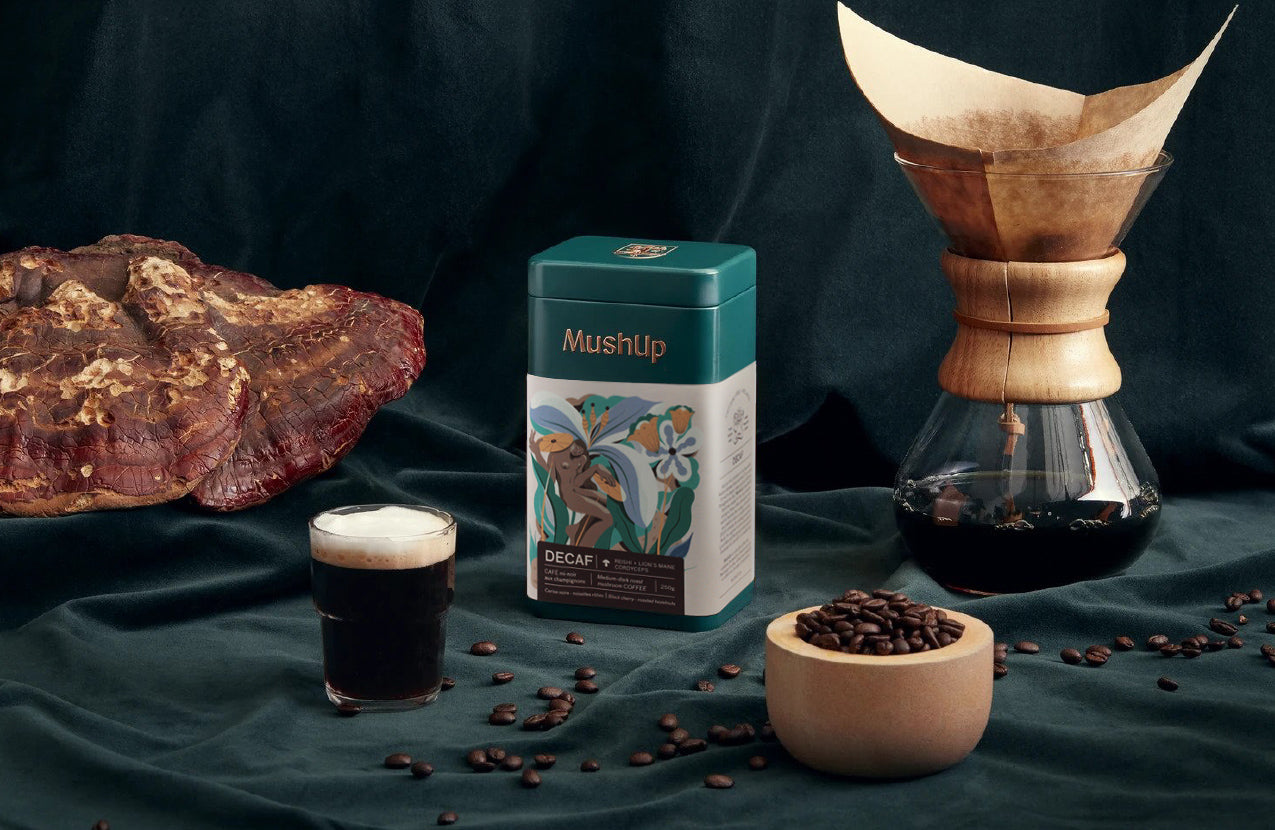
Our MushUp coffees, on the other hand, are made from 100% Arabica beans to offer you refined and rich flavors that perfectly complement the benefits of our adaptogenic mushrooms: stimulating or calming, they also possess anti-cancer properties, strengthen the immune system, and have a positive effect on memory, concentration, and depressive disorders. Antioxidants are naturally present in coffee, but MushUp coffees contain a higher concentration than regular coffee.
If you haven't already, check them out!