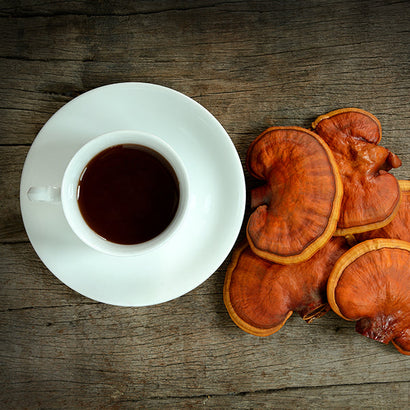



You've probably already heard about plants or mushrooms with medicinal properties, whose benefits have been passed down to us through traditional remedies or herbal medicine. We'll take you on a journey to discover their history, their properties, and most importantly, how to use them!
Once upon a time, there were adaptogenic plants and fungi.
Using plants for medicinal purposes is not new. The oldest evidence of this practice is a Sumerian clay plaque dating from 3000 BC, which provides information on decoctions made from thyme, myrtle, canker, and willow.
In ancient times, these natural resources were used not only for healing, but also to improve the body's ability to survive in harsh living conditions.
In the 1940s, during World War II, the government of the former USSR conducted research on natural substances to enhance the physical and mental capabilities of its army. Toxicologist Nikolai Lazarev, in particular, studied the properties of Schisandra chinensis and its berries on soldiers. It was found that consuming its berries improved night vision, suppressed hunger, and delayed the onset of fatigue.
The term adaptogen first appeared in 1947 to define plants and fungi that can improve our body's resistance to stress.
Then, in 1960, a student of the Russian toxicologist, Israel Bekhman, clarified the definition by determining 3 characteristics of the adaptogenic plant.
This one must:
- bring about only minor variations in biological functions.
- to have a normalizing effect allowing for an improvement in physical or psychological condition.
- increase the body's resistance.
A super booster, you say?
To understand how adaptogenic plants and fungi work, we need to look at how our body manages stress, whether physical or psychological.
This is called the general adaptation syndrome , according to the theory developed by the Canadian Hans Selye. This condition is characterized by 3 stages:
1. The alarm: our body comes into contact with stress. This can result from the environment, an external element, or a chemical or biological agent acting on stress hormones (adrenaline and cortisol). At this stage, our brain activates defense mechanisms.
2° Resistance: Stress is well established. The body continues to defend itself in order to adapt to its environment.
3° Exhaustion : the body can no longer adapt to the stress to which it is subjected.
Adaptogenic plants and fungi play a role in phase 2 of this process. Their mission: to delay the onset of phase 3 as much as possible. Thus, fungi like Reishi and Chaga can boost the immune system, Siberian Ginseng can reduce fatigue, butterfly pea flower can promote relaxation, and lion's mane mushroom can aid concentration.
By adapting to our body, adaptogenic plants and fungi allow us to rebalance it.
How to consume it?
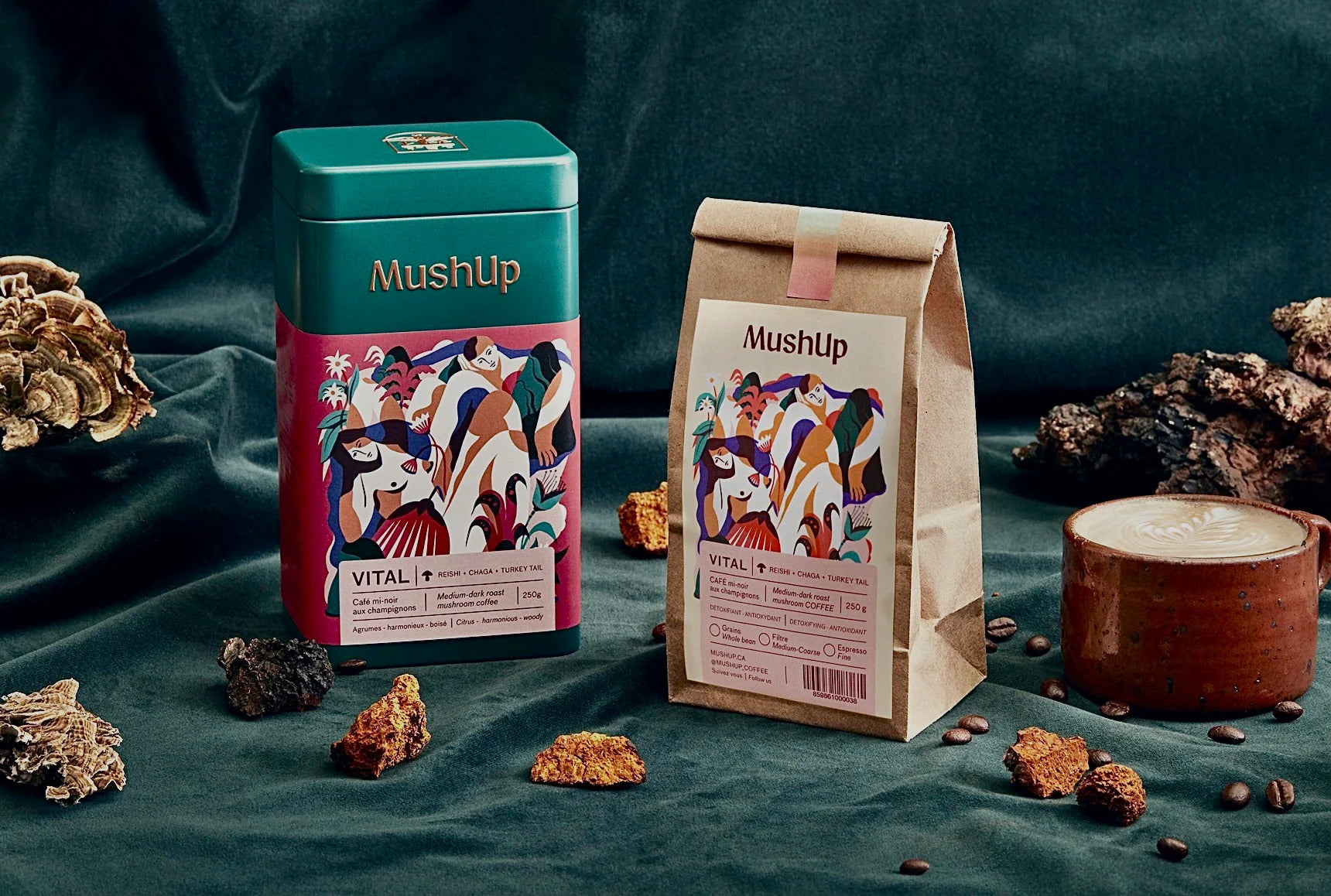
There are many ways to consume these body boosters : by enjoying a good cup of MushUp coffee , for example ;), by sipping an herbal infusion, by taking them in powder form, in capsules, or by incorporating them directly into your recipes. It all depends on the plant or mushroom whose benefits are most useful to you at the time.
By the way, did you know? Adaptogenic plants and fungi are not limited to the food sphere; some cosmetic industries incorporate them into their products to counteract the harmful effects of stress on the skin and aging through their actions on free radicals.
Adaptogenic plants and fungi will continue to amaze us!